← Mementoir home · Part 1: April 11 – May 1
Build journal · Part 2
Polish, naming, ship
Three weeks of late nights, a portmanteau, an AI feature, and a Submit button. The part of the build where the app stopped being mine and started being a product.
At the end of Part 1, I wrote: "if I had to ship the app on Monday, I think I could."
Reader: I could not.
The next three weeks were the part of the build I'd been quietly dreading — the part where "looks good on my desk" turns into "actually exists in the world." Onboarding. Naming. A monetization story. App Store screenshots. An About page. The hundred small panics that come with attaching your name to a thing strangers can download.
Twenty-one days, another hundred-or-so screenshots, and one Submit for Review tap later, here's how it went.
Day 22 · May 2Real entries, on real phones
Part 1 ended on the iPad. The next morning I started building the iPhone layout, because every test reader I'd shown the iPad version to had said some version of "this looks great, but I don't carry my iPad on trips."
It turns out the scrapbook layout I'd spent three weeks tuning for a 13-inch canvas doesn't just shrink. It had to be rethought from the photo-stacking outward. Two days of work, this is roughly where it landed:
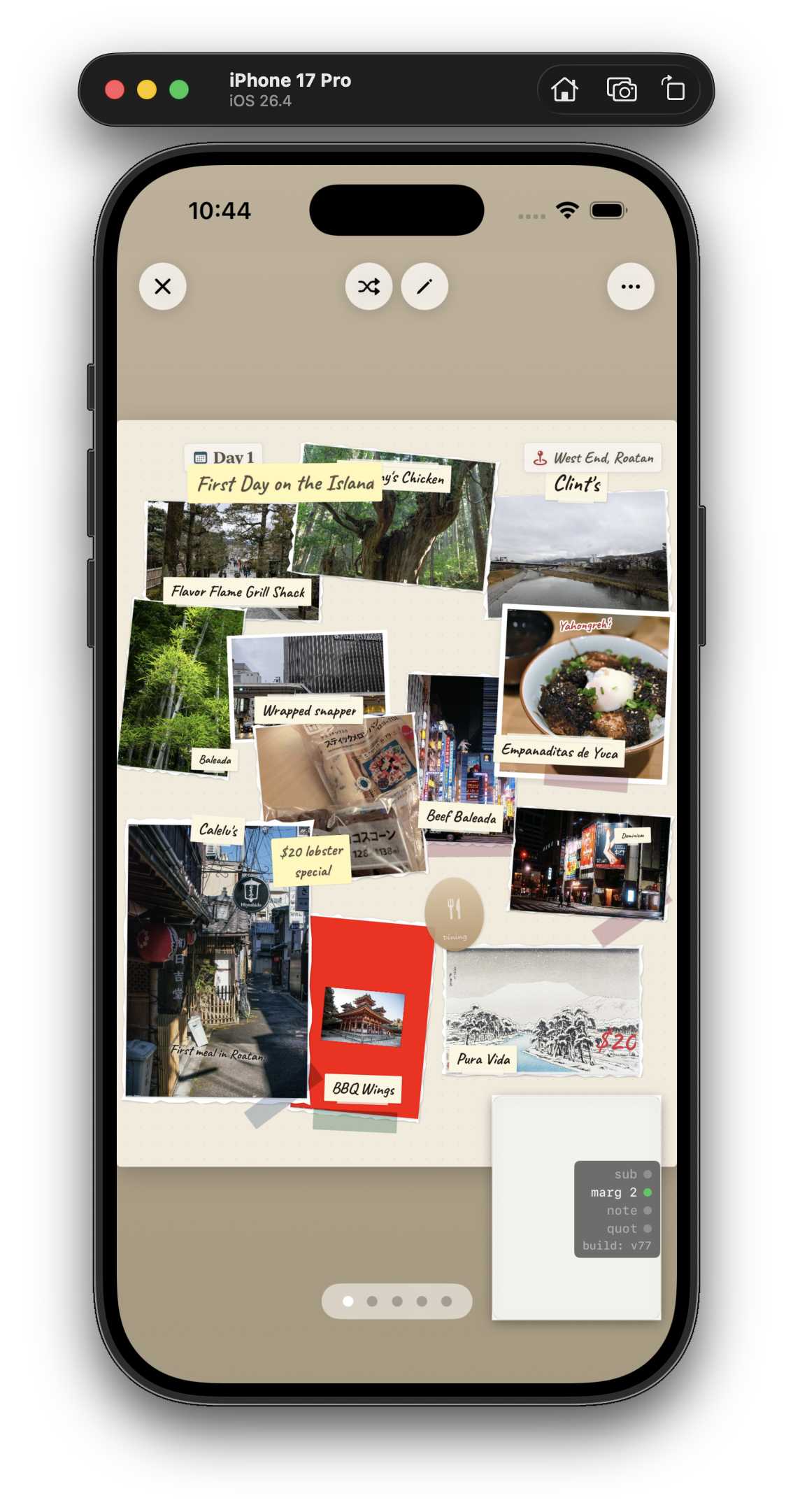
"Roatán" turned out to be a recurring word over the next few weeks. More on that.
Day 22 · May 2The 5 AM era
There's a stretch of about ten days in the middle of May where almost every screenshot in my folder is timestamped between 4 AM and 6 AM. I don't recommend this as a way to live, but I do recommend looking at the kind of work it produces — because almost none of it is the kind of work you'd do in daylight, when an adult might wander past.
The clearest snapshot I have of the era is this one, captured on the iPad simulator at 6:41 AM on a Saturday, after what I'm fairly sure was a five-hour stretch of moving captions a few points at a time:
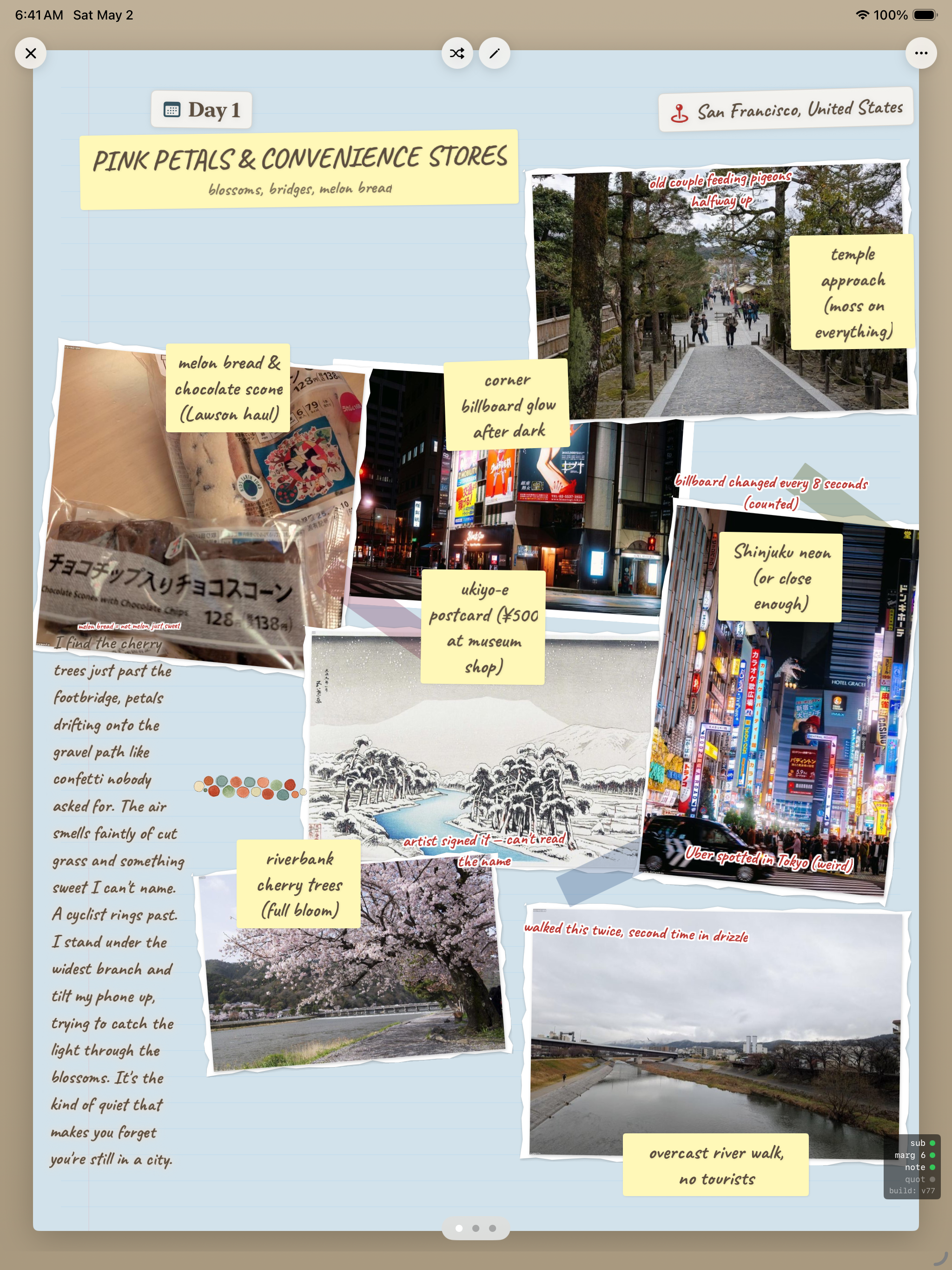
The reason this page took until 6:41 AM is the long block of text on the left. Up until this morning, the engine could handle short captions and it could handle photos, but anything longer than a sentence tended to bully its neighbors — pushing photos out of frame, breaking the masonry, leaving dead zones at the bottom of the page. I'd been tuning the wrap thresholds and the column reservation logic for two days, and somewhere around 5 AM something finally clicked: the long-prose block had to claim its column up-front, not get added to the layout after the photos were already placed.
I don't have a screenshot of the moment the fix worked. The closest I have is this one, captured a few minutes later — me reading the result and quietly forgetting to take a screenshot of anything except the finished page.
That's most of what the 5 AM era was: hours of moving thresholds by 0.02, capped by ten minutes of a page that finally read like a page. Then sleep.
"The 5 AM era was, in retrospect, where the app's actual personality got finalized."
Day 31 · May 11Naming the thing
I'd been calling it "travel journal" in my head for a month. At some point you have to put a real name on the App Store form, and "travel journal" is not a name, it's a category.
I asked for portmanteau suggestions. I got a list:
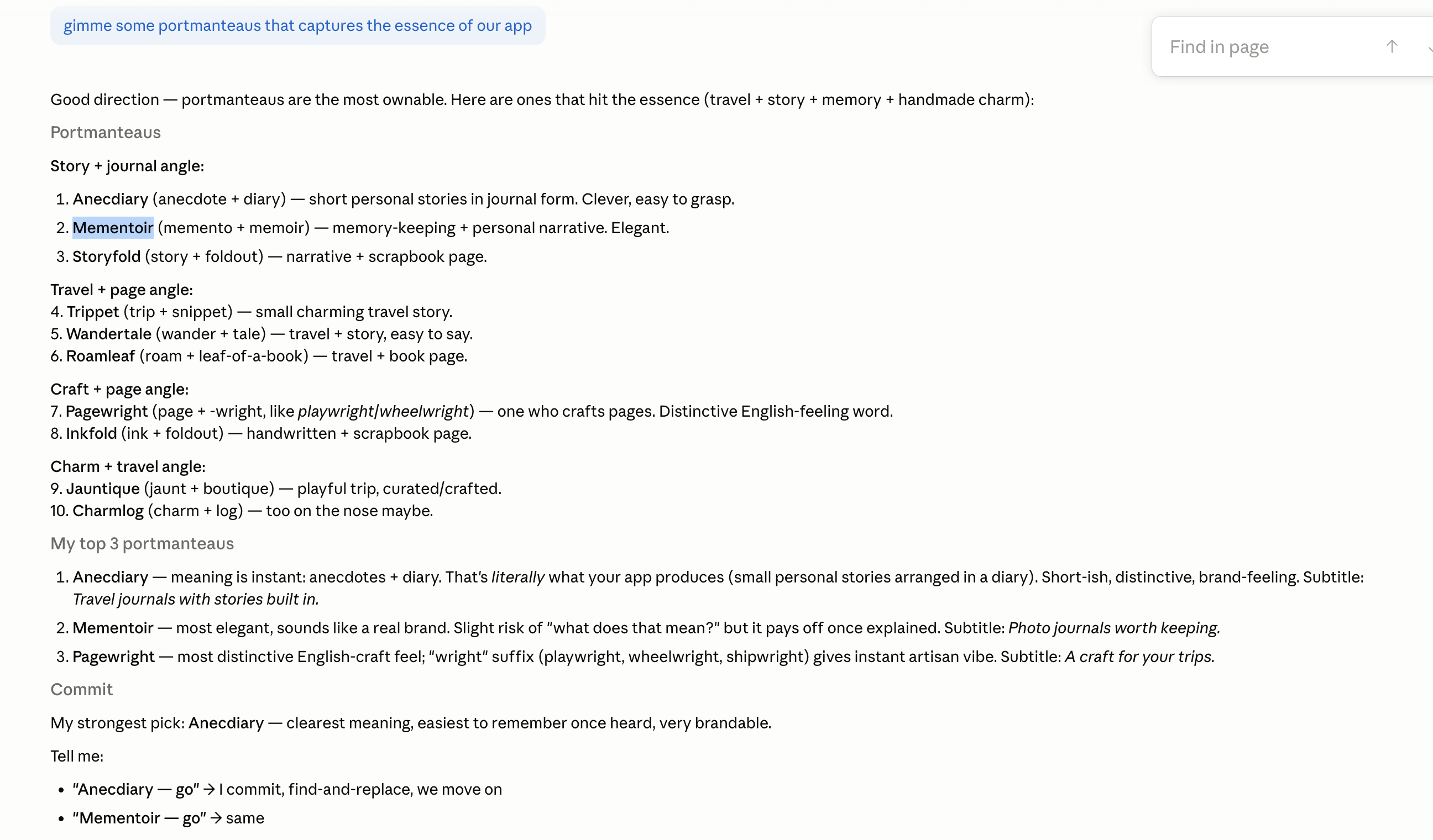
What I learned from naming an app, condensed: the best name is the one you can still type without flinching after the hundredth time you say it out loud. Most candidates fail this test within an hour. Mementoir didn't.
Day 36 · May 16The Magic Wizard
This was the biggest feature added in the entire month, and it almost didn't make it in.
The complaint that kept coming back from test users was the same one I'd had myself the first time I'd seen a beautiful travel journal: I could never make that. Composition on a blank page is intimidating. Most people don't want to fight a layout engine; they want a layout to show up already half-done.
So I built a thing the app calls the Magic Wizard. You pick photos, you tell it the trip name and dates, and it stitches a draft journal — captions, layouts, locations, the works — that you then refine. The user-facing verb is "stitch," which I'm proud of.
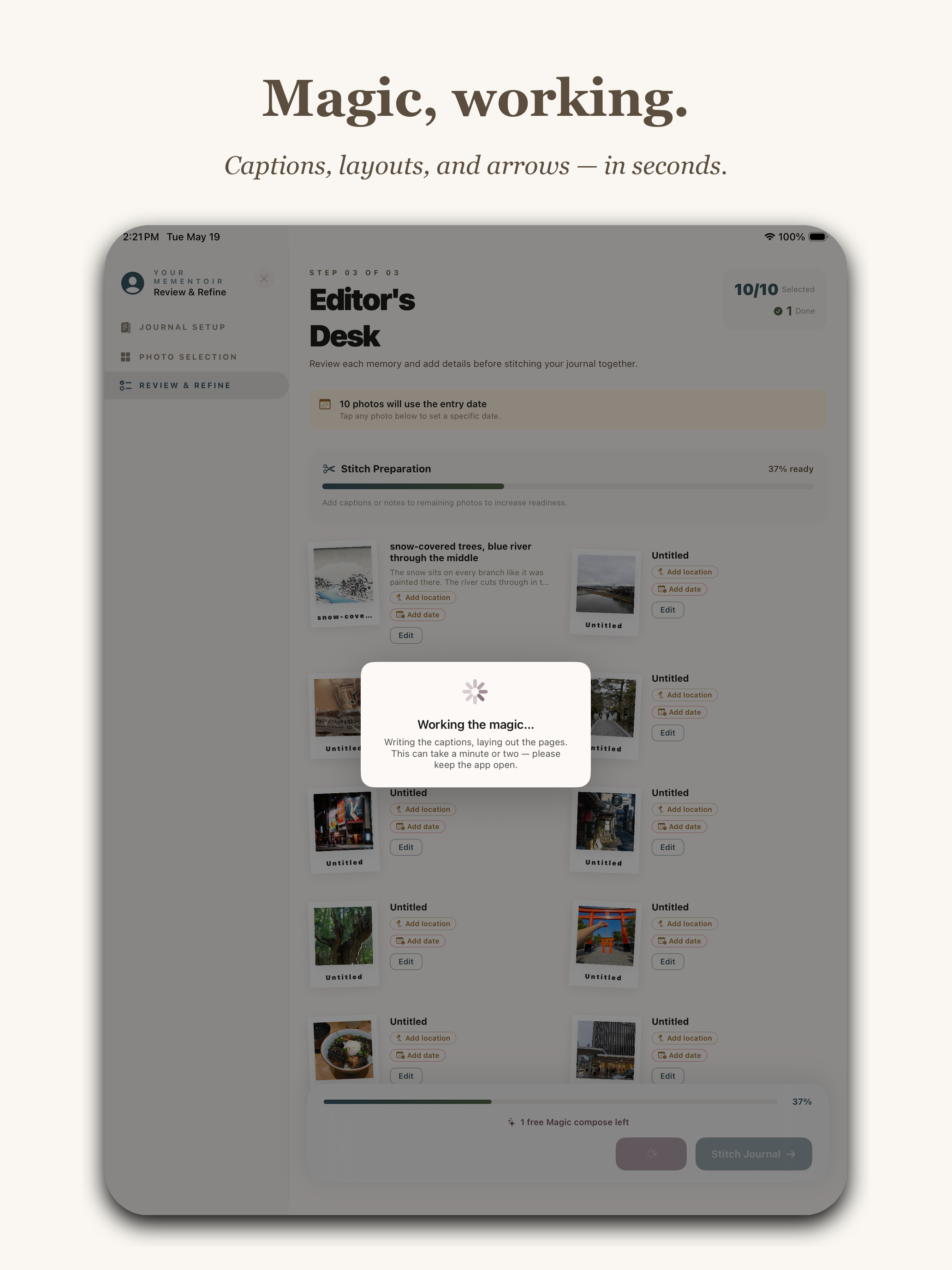
I shipped a basic version on May 14, then spent the next four days re-doing it twice. The first version made captions that were too verbose. The second made them too clipped. The third was the one — captions in the right voice ("morning walk," "saw this," "loved this"), arrows in the right places, photos sized like a person who knows what they're doing would size them.
Days 39–42 · May 19–22The About page (the one that almost made me not ship)
I wrote the App Store description, the keywords, the support URL, the privacy policy. Boring. Then I sat down to write the in-app About page and I couldn't do it for three hours.
The problem was that I had to admit, in print, what the app actually was — not the feature list version, but the why-does-this-exist version. The first draft on May 19 was three short paragraphs and a Roatán airport. I revised it on May 22, the morning of submission, when I realized the version on disk was still missing the moment that actually convinced me the app should exist:
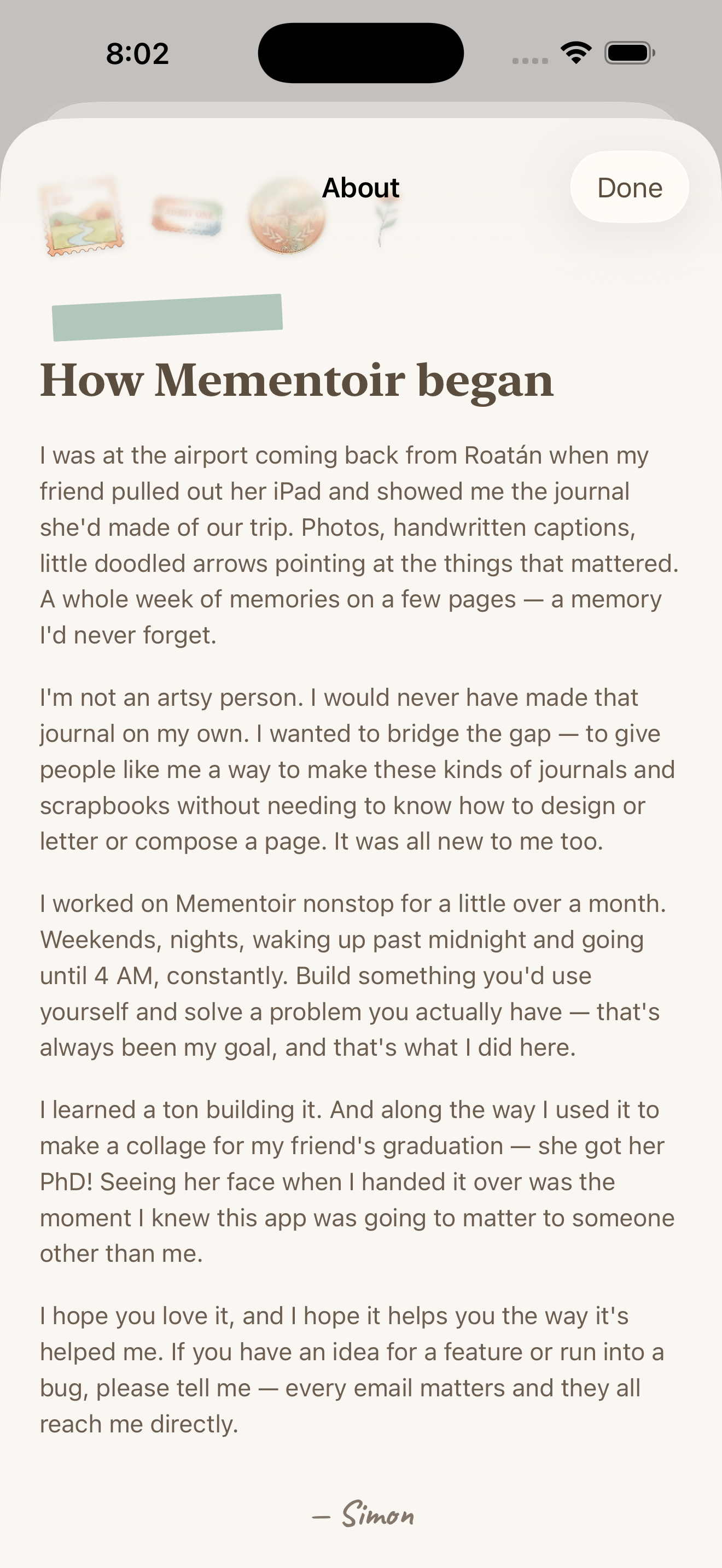
This is the screen I'd point at if someone asked what the difference is between an app and a product. You don't need the About page. The app works without it. But the About page is what makes the app a thing a person made, instead of a thing a company shipped — and the PhD-collage line is what makes it a thing that's been used by anyone other than me. I almost didn't write either of them. I'm glad I did.
Day 40 · May 20App Store screenshots
The last 48 hours were almost entirely about producing the screenshots Apple lets you upload to the listing — up to ten per device, in my case nine. Every other app on the store is fighting for the same 1.5 seconds of attention in search results, and those frames are how you win them.
My rule for the marketing layout: one headline of three or four words, one tagline beneath it, then the app doing the thing — framed cleanly, no badges, no "as seen in" chrome, no fake confetti. If the headline names the feature and the screenshot proves it, you've spent the user's attention well.
I organized the nine around the three things I most wanted a stranger to understand in 1.5 seconds: the layout engine, the Wizard, and the canvas tools. In that order.
I. The layout engine
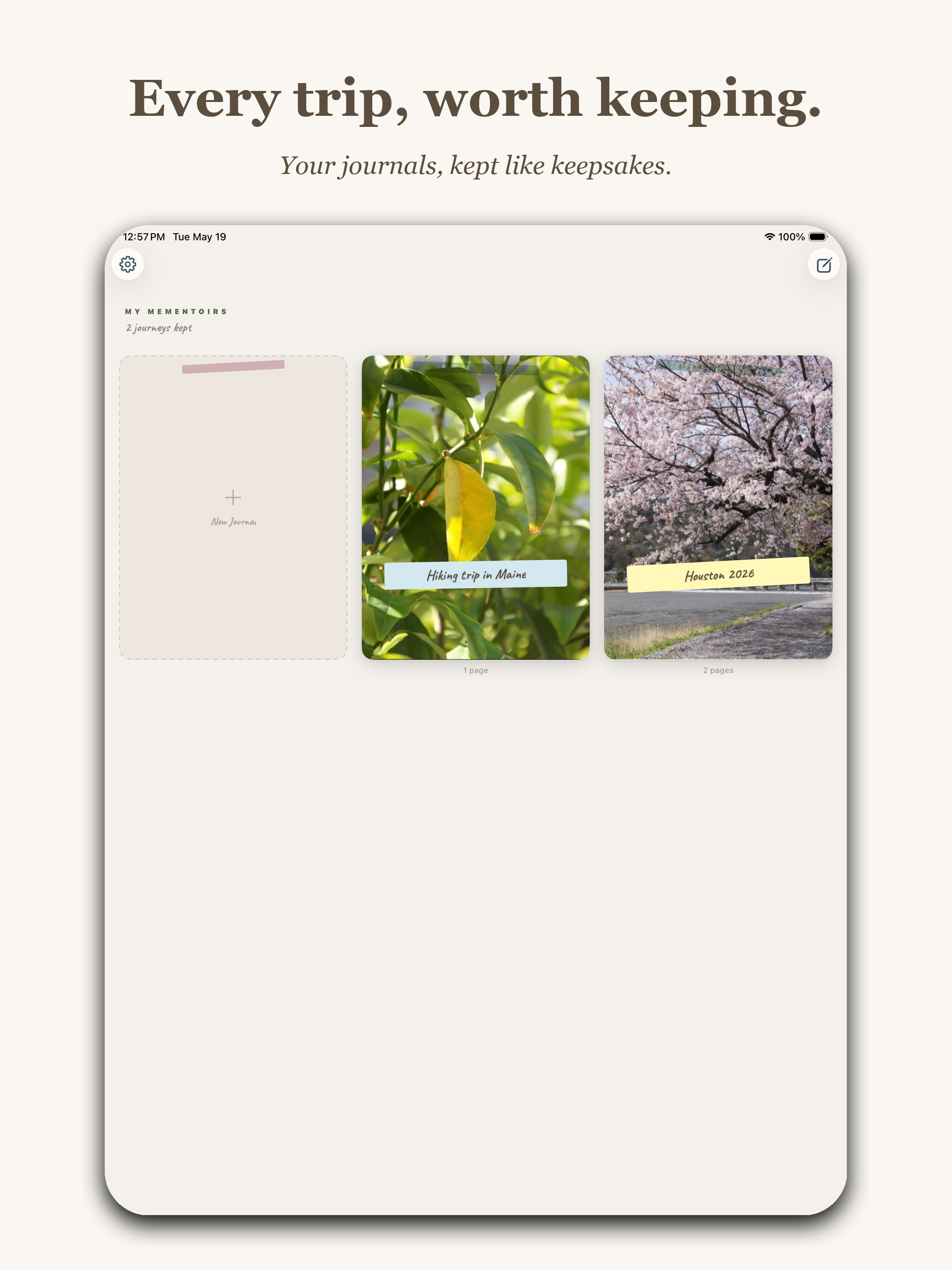
This is what the app is, before it's anything else: a system that takes a pile of photos and arranges them on a page like a person with taste would. The first two screenshots had to prove that — one zoomed in on a finished page, one zoomed out on a library of them.
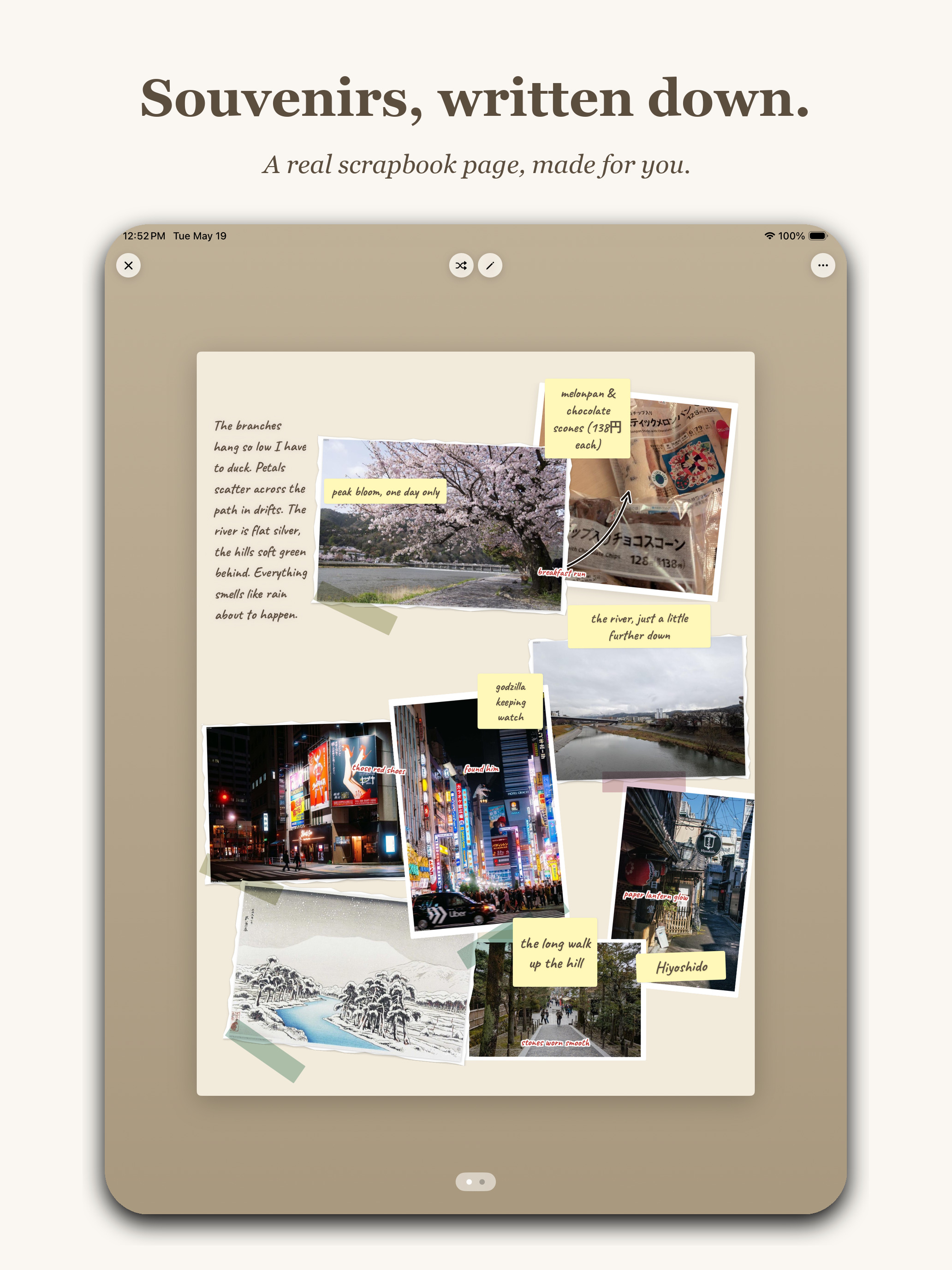
II. The Wizard
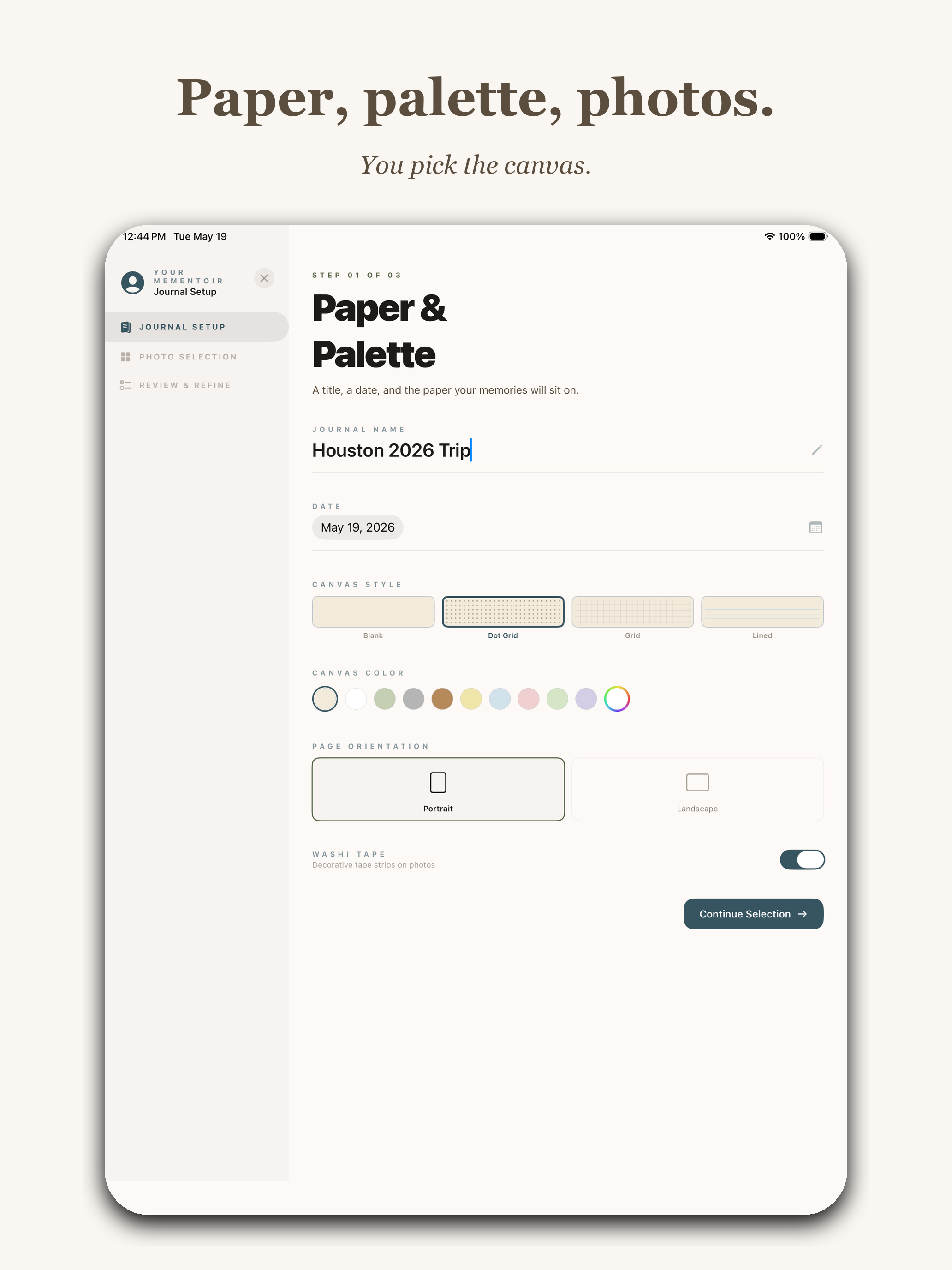
The Wizard had to show up early in the listing because it's the feature that does the work most people are afraid to do themselves. Two screenshots — one for the setup, one for the human-in-the-loop refinement — followed by the "Stitched for you, or by you" frame you already saw earlier when I introduced the Magic Wizard above.
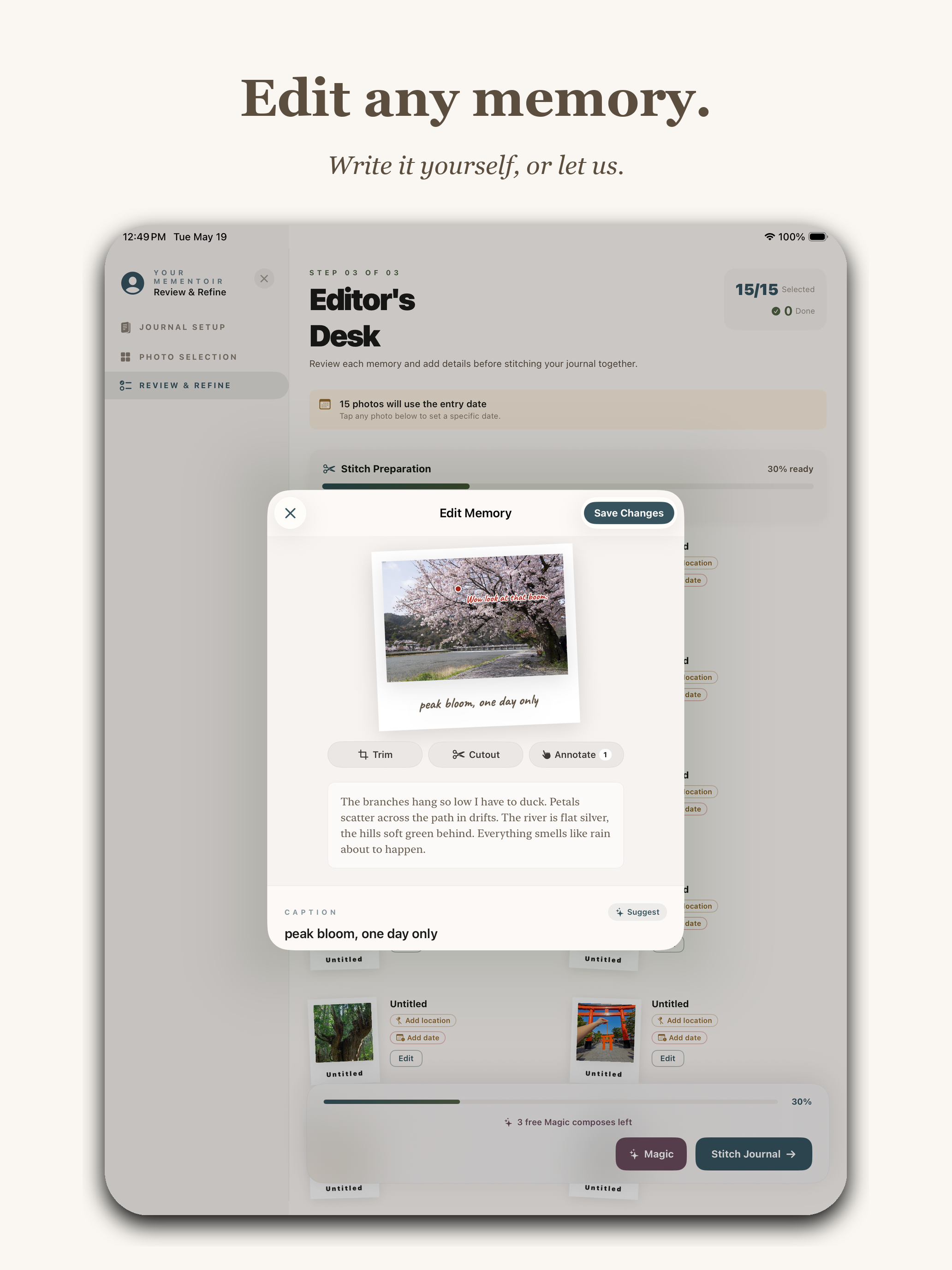
III. The canvas tools
The last pillar: once the Wizard hands you a draft, what can you actually do to a page? Three screenshots covering the three most-used canvas actions — focus on a photo, tap to annotate it, decorate the page.
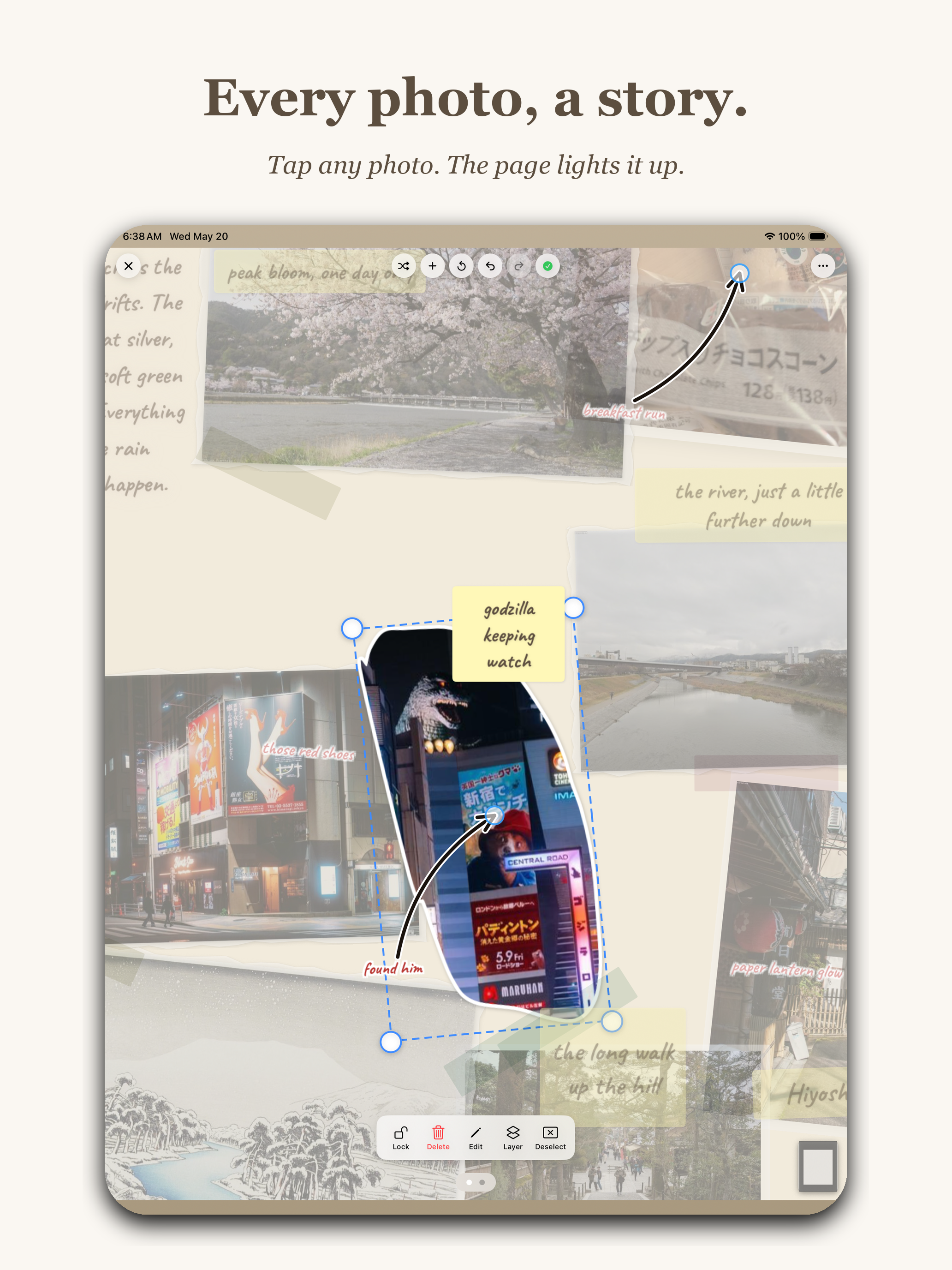
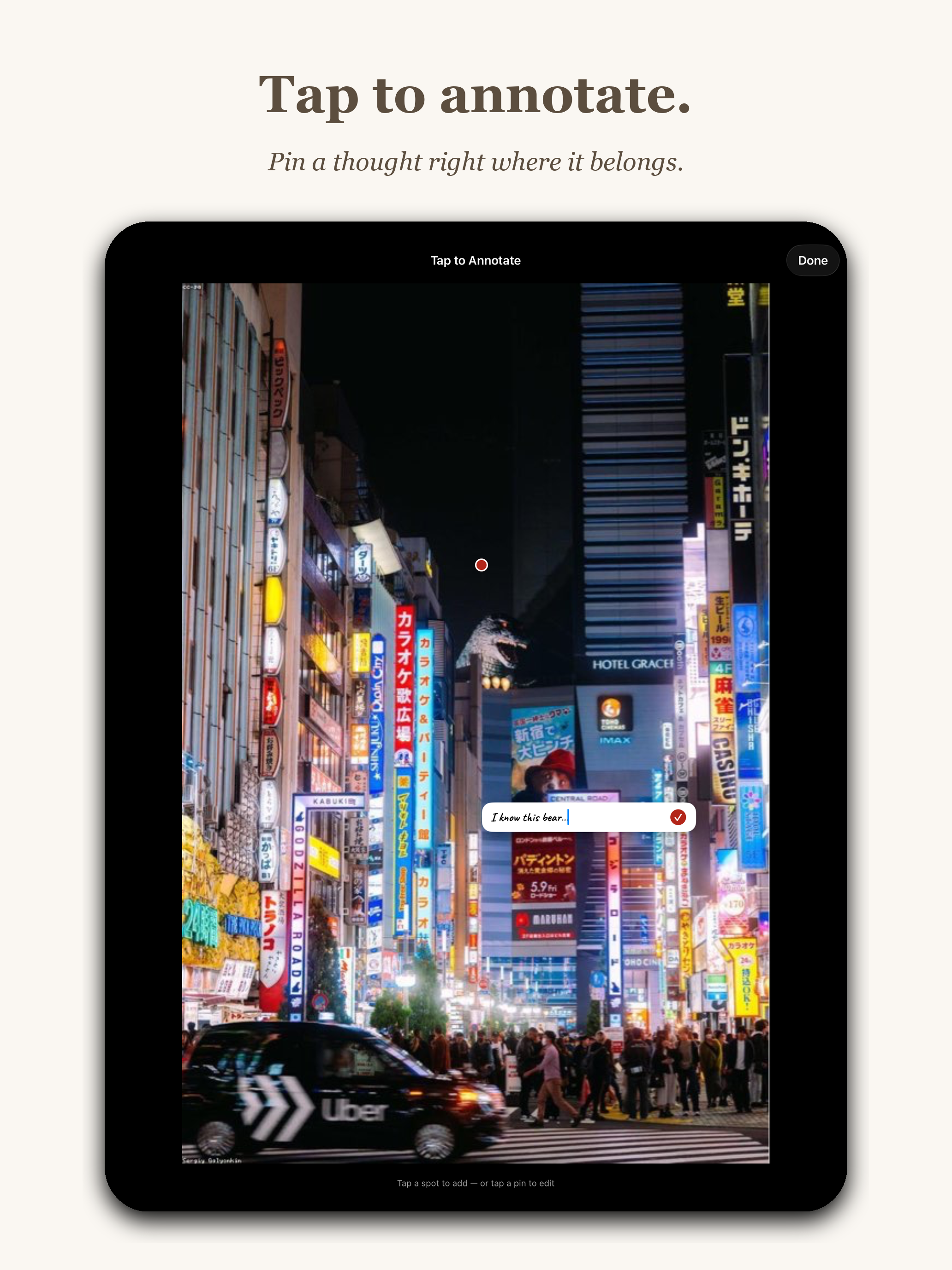
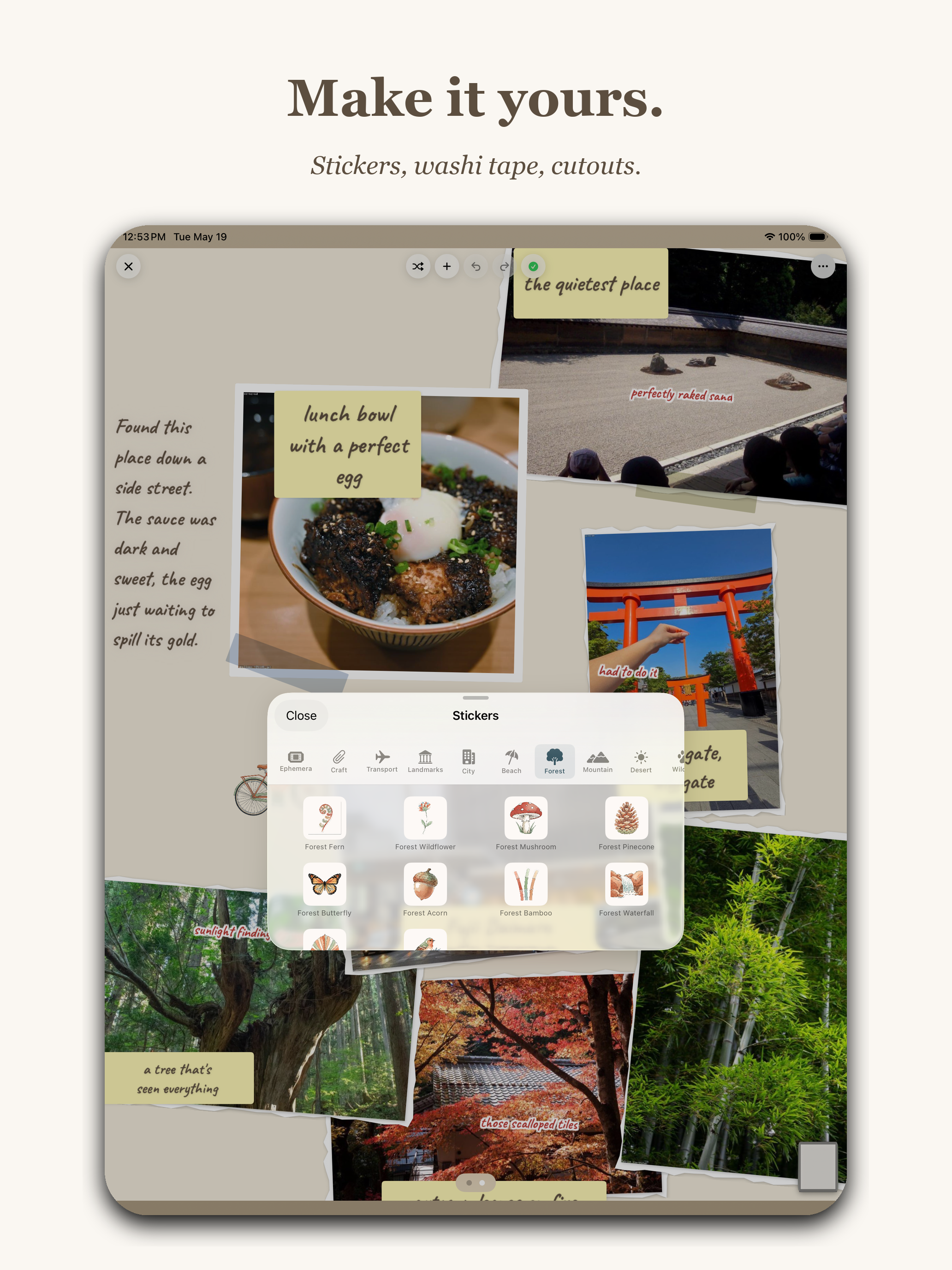
IV. And finally — share or print
The last frame had to answer the question "okay, what do I do with the thing I made?" The honest answer is: anything you want, but specifically, you can export it as a PDF that prints cleanly, or share it as an image. The export carries a small "Made with Mementoir" watermark in the corner, and that's the only place I let the app's brand sit on top of the user's content.
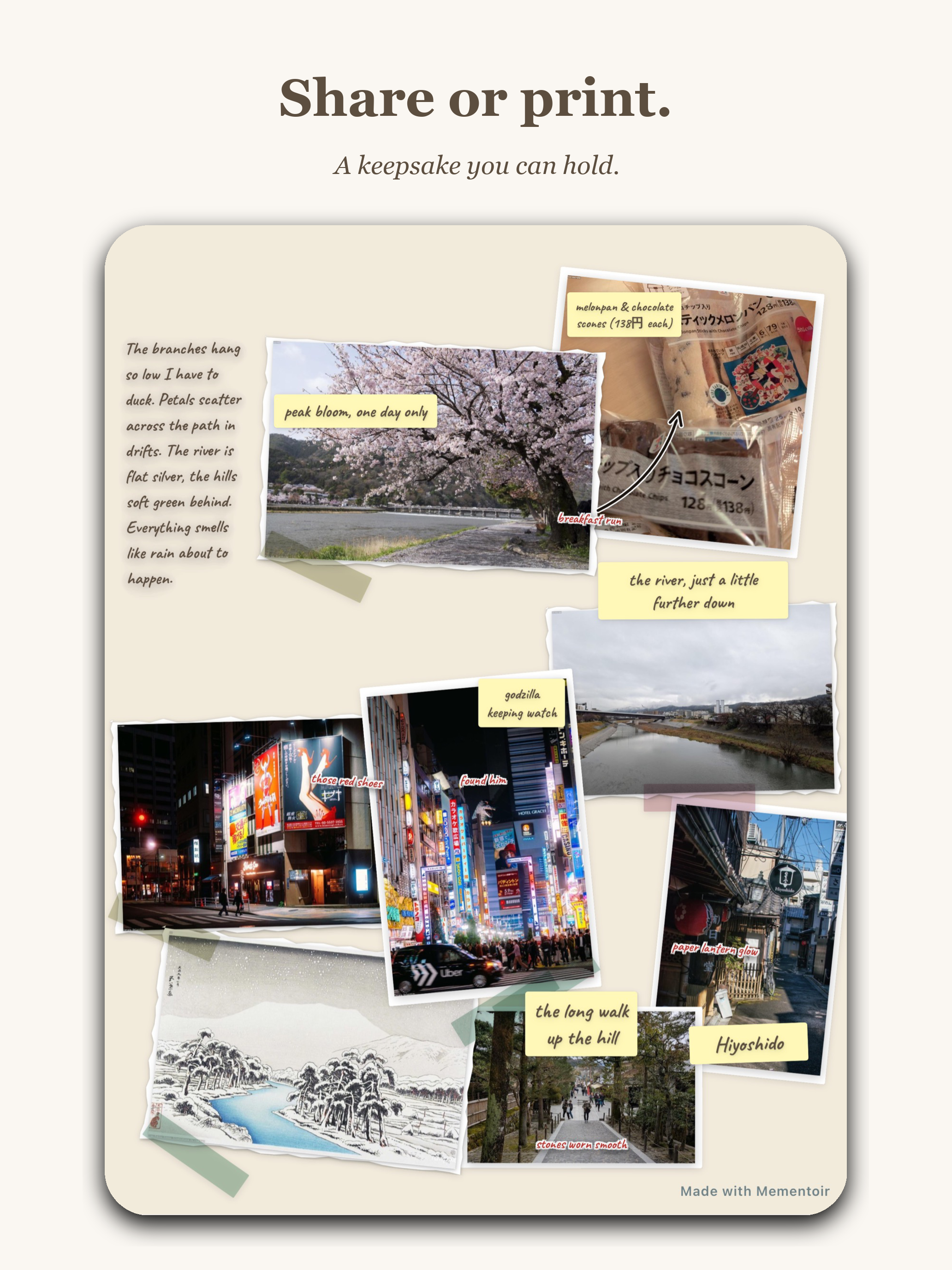
Day 42 · May 22Submit for Review
This morning, at 11:27 AM, I opened App Store Connect, ran through the build summary one more time, scrolled to the bottom, and tapped Submit for Review.
The button is small. The hesitation before tapping it is not.
Now it's in the queue. Apple says 24–48 hours, which historically means anywhere between four hours and a week. The first rejection (if there is one) is almost certainly going to be about my subscription disclosure language. The second one (if there is one) is anyone's guess.
But the part that was mine to control is done.
Forty-two days from the first wireframe to a build sitting in front of an Apple reviewer. About 350 screenshots taken, twenty of which made it into these two blog posts. One name. One Magic Wizard. One About page that almost broke me. One submit button.
Whatever happens next — approval, rejection, downloads, silence — I made this. And I have the screenshots to prove it.